
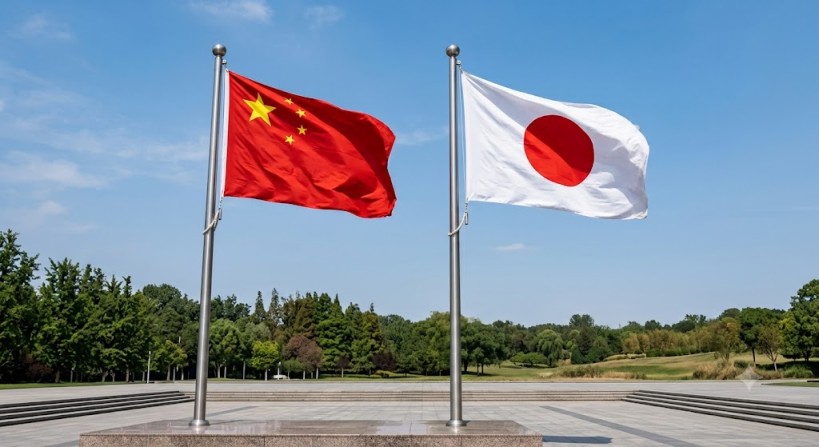
In a move that underscores growing tensions, China has imposed export restrictions on 40 Japanese entities, accusing them of aiding Japan’s military buildup and efforts toward “remilitarization.” These new controls affect 20 Japanese companies and divisions tied to major firms, barring Chinese and foreign exporters from selling specific dual-use goods that could be utilized for both civilian and military functions.
An additional 20 Japanese entities have been placed on a watch list, which requires exporters to obtain special permissions, conduct risk evaluations, and ensure that their products are not intended for military applications. China argues these steps are crucial to deter what it perceives as Japan’s escalating military expansion. Beijing has voiced particular concern over Japan’s bolstered defense capabilities, including the development of long-range weaponry and increased security partnerships with other nations.
In response, Japan has denounced China’s export controls as unacceptable and has called for their retraction. Japanese officials are currently assessing the potential repercussions of these measures and are contemplating suitable counteractions. This comes against a backdrop of heightened tension following Japan’s recent reinforcement of its defense strategy and military prowess, actions that have been met with repeated opposition from Beijing, especially in matters related to Taiwan.
Though analysts suggest that these restrictions may serve as a diplomatic signal rather than a sweeping economic measure, they highlight the delicate state of China-Japan relations amid broader regional security challenges. With both countries holding significant influence in the region, their interactions are closely monitored by global observers wary of further escalation.