
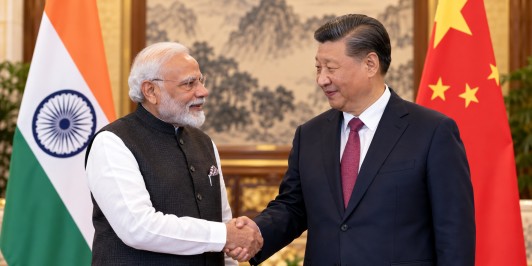
In a significant diplomatic development, China has expressed approval of Prime Minister Narendra Modi’s assertion regarding India’s sovereign foreign policy following his bilateral dialogue with Chinese President Xi Jinping at the BRICS Summit in New Delhi. During the meeting, Modi emphasized that India’s relationship with China is independent and will not be swayed by third-party influences. This sentiment was acknowledged by Chinese Foreign Ministry spokesperson Guo Jiakun, who highlighted Beijing’s appreciation for Modi’s stance, underscoring the importance of China and India supporting each other’s growth and maintaining their partnership.
President Xi Jinping remarked that despite the distinct national contexts of China and India, the focus should be on fostering cooperation while managing differences through mutual respect and understanding. This perspective aligns with India’s position, which stresses the critical nature of peace and stability along the border for enhancing bilateral ties. Modi reiterated the necessity of adhering to existing agreements and understandings concerning border issues to prevent potential conflicts.
The discourse between Modi and Xi comes in the wake of prolonged tensions along the Line of Actual Control (LAC), a contested boundary between the two nations. The two leaders affirmed their commitment to pursuing a fair and mutually acceptable resolution to the boundary dispute, emphasizing that differences must not escalate into disputes. This dialogue reflects a mutual desire to manage discord through diplomatic channels and maintain a cooperative relationship.
In a bid to deescalate military tensions, India and China reached a pivotal agreement in October 2024, which involved the disengagement of troops from multiple friction points in the Ladakh sector. This accord marked a significant step towards alleviating the extended military standoff that had strained bilateral relations. The recent discussions between Modi and Xi signal a continued effort by both countries to address and resolve outstanding issues, emphasizing dialogue and cooperation over conflict.