
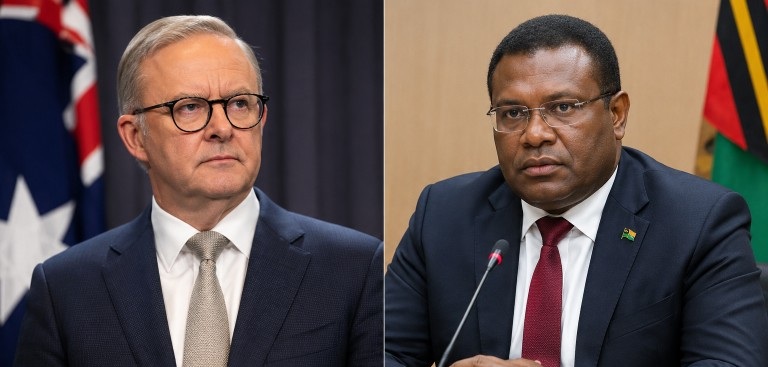
Australia and Vanuatu have formalized a significant security and development accord known as the Nakamal Agreement, which had been delayed due to concerns from Vanuatu about its implications. This agreement is set to enhance collaboration between the two nations, particularly in the areas of security and infrastructure development. A key aspect of the pact is that Australia will be consulted on substantial third-party investments in Vanuatu’s critical infrastructure. Furthermore, it solidifies Australia’s position as a principal partner in security and law enforcement for the island nation.
The delay in finalizing the agreement arose over worries from Vanuatu that it might restrict its ability to attract investments from other international partners. However, the agreement has been structured to ensure it upholds Vanuatu’s sovereignty, explicitly stating that it does not permit the establishment of foreign military bases or the militarization of its infrastructure. This careful balance seeks to maintain the island’s autonomy while fostering closer ties with Australia.
Australia has committed considerable financial resources to support the Nakamal Agreement over the coming decade. This move is part of a broader strategy to bolster its influence in the Pacific region, an area where competition with China has notably intensified. China has played a prominent role in Vanuatu’s development, investing heavily in infrastructure projects such as government buildings and transport systems. Despite the new agreement with Australia, Vanuatu intends to continue engaging economically with China, emphasizing a commitment to transparency in its international dealings.
This agreement is emblematic of Australia’s broader regional strategy to fortify alliances within the Pacific in the face of growing strategic rivalry and external influences. By securing and formalizing relationships with Pacific nations like Vanuatu, Australia aims to counterbalance the expanding footprint of other global powers in the region, ensuring that its interests and those of its allies are safeguarded.