
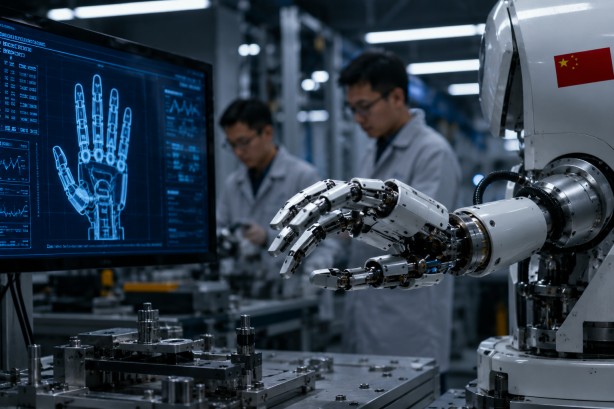
Chinese tech firms are ramping up their efforts to create advanced robotic hands, considered one of the most challenging aspects of developing humanoid robots. In a country known for its robust manufacturing capabilities, startups are blending artificial intelligence with these strengths to design robotic hands that can perform intricate tasks. These tasks include grasping various objects, using tools, and managing daily activities, which is crucial for making humanoid robots useful in homes, healthcare, and industries.
The complexity of replicating the human hand’s dexterity and precision surpasses that of constructing other parts of a humanoid robot, according to experts. Developers face significant hardware challenges, like creating compact motors and sensors, alongside software challenges that involve teaching robots to comprehend touch, pressure, and complex movements. Addressing these challenges is essential for advancing the functionality of robotic hands.
China has positioned itself as a leader in the global robotics sector, backed by an advanced supply chain and a government-focused initiative on “embodied AI.” This environment fosters rapid innovation, with companies developing technologies such as robotic hands, sensor gloves, and AI systems that can learn human movements through data collected in real-world scenarios. This thriving ecosystem is set to propel the country forward in the field of robotics.
Researchers in the field believe that enhancing the dexterity of robotic hands is pivotal for creating robots capable of performing a broad spectrum of routine tasks. These range from household chores to industrial jobs and even sophisticated prosthetic applications. The improvements in this technology will mark a significant step forward for humanoid robots.
Industry leaders anticipate that ongoing advancements in artificial intelligence and robotics will eventually allow humanoid robots to operate more seamlessly alongside humans. This progress could unlock new possibilities in various sectors, including manufacturing, healthcare, and consumer services, potentially transforming how these industries operate.